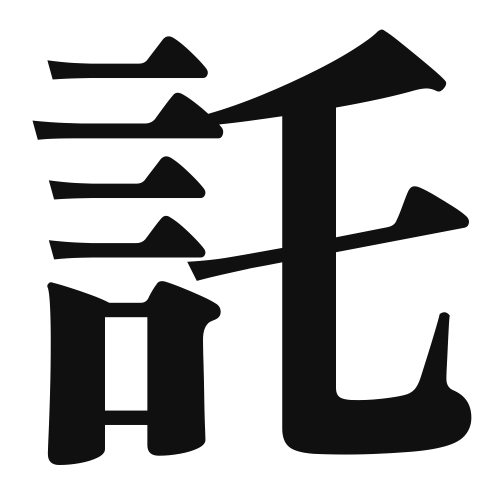
1. Overview of Meaning
The kanji “託” (taku) means to entrust or to delegate. It conveys the idea of assigning responsibility or handing over something to someone else for safekeeping or management.
2. Formation and Radical
Formation of the Kanji: The kanji “託” is a compound character (会意文字) that combines the elements of “言” (word) and “托” (to support or to place). This suggests the act of placing trust in someone through words.
Radical: The radical of “託” is “言” (gen), which relates to speech or words, emphasizing the communicative aspect of entrusting.
3. Examples of Usage
Common Words and Phrases:
- 託児所 (たくじじょ, takuji-jo) – nursery or daycare center
- 託す (たくす, takusu) – to entrust
Example Sentences in Daily Conversation:
- 彼にこの仕事を託しました。 (かれにこのしごとをたくしました。) – I entrusted this job to him.
- 子供を託児所に預ける予定です。 (こどもをたくじじょにあずけるよていです。) – I plan to leave my child at the daycare center.
4. Synonyms and Antonyms
Similar Kanji:
- 委託 (いたく, itaku) – to entrust or commission, which emphasizes a formal agreement.
- 預ける (あずける, azukeru) – to deposit or leave something in someone’s care, focusing more on the act of leaving.
Antonyms:
- 拒否 (きょひ, kyohi) – to refuse, which is the opposite of entrusting.
- 取り戻す (とりもどす, torimodosu) – to reclaim, indicating the act of taking back something that was entrusted.
5. Cultural and Historical Background
Relation to Japanese Culture: The concept of “託” is significant in Japanese culture, where trust and delegation are essential in both personal and professional relationships. It reflects the importance of community and cooperation.
Proverbs and Idioms:
- 「信頼は託すことから始まる」 (しんらいはたくすことからはじまる) – “Trust begins with entrusting,” highlighting the foundational role of trust in relationships.