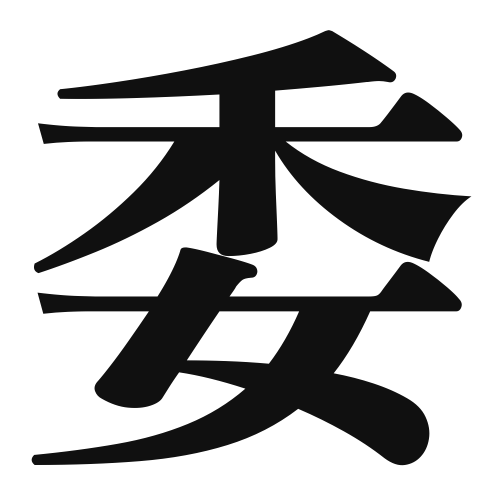
1. Overview of Meaning
The kanji 委 (i) generally means “to entrust” or “to delegate.” It conveys the idea of assigning responsibility or authority to someone else.
2. Formation and Radical
Formation of the Kanji: The kanji 委 is a phonetic-ideographic character (形声文字). It combines the radical for “to speak” (言) and a phonetic component that suggests its pronunciation.
Radical: The radical of 委 is 言 (gen), which relates to speech or words, indicating that the act of entrusting often involves communication.
3. Examples of Usage
Common Words and Phrases: Some frequently used words that include 委 are:
- 委員会 (いいんかい) – committee
- 委任 (いにん) – delegation
Example Sentences in Daily Conversation:
- 彼にプロジェクトを委任しました。 (かれにプロジェクトをいにんしました。) – I entrusted the project to him.
- 委員会での決定が重要です。 (いいんかいでのけっていがじゅうようです。) – The decisions made in the committee are important.
4. Synonyms and Antonyms
Similar Kanji: A similar kanji is 託 (たく), which also means “to entrust,” but it often implies a more personal or emotional connection.
Antonyms: A kanji with an opposite meaning is 拒 (きょ), which means “to refuse” or “to reject,” indicating a lack of trust or delegation.
5. Cultural and Historical Background
Relation to Japanese Culture: The concept of 委 is significant in Japanese culture, especially in business and governance, where delegation and trust are essential for teamwork and collaboration.
Proverbs and Idioms: One relevant proverb is “信頼は委任から生まれる” (しんらいはいにんからうまれる), which translates to “Trust is born from delegation,” highlighting the importance of entrusting others in building relationships.